Sleep Stations
2023
Experience Design 1
Pop-up exhibit promoting reflection educating users on healthy sleep habits
During the first half of the current semester, I worked with a partner to explore what a healthy work/life balance in young adults looks like and what we can do to encourage them to explore different ways to improve sleep quality. Based on the feedback from our target users, we created a concept pop-up exhibit that allows users to explore various sensory experiences and find new ways to curate their space according to their needs.
The exhibit would be a collection of rooms contained in a larger, enclosed mobile space. Each room would be tailored to engage one of the five senses, excluding taste and would contain a variety of interactive objects and sensory stimuli. Users would be able to enter the exhibit and explore each room at their own pace with the freedom to interact with and change most elements within a room. This would allow them to play with the features of each room and curate a space that they feel the most comfortable in.
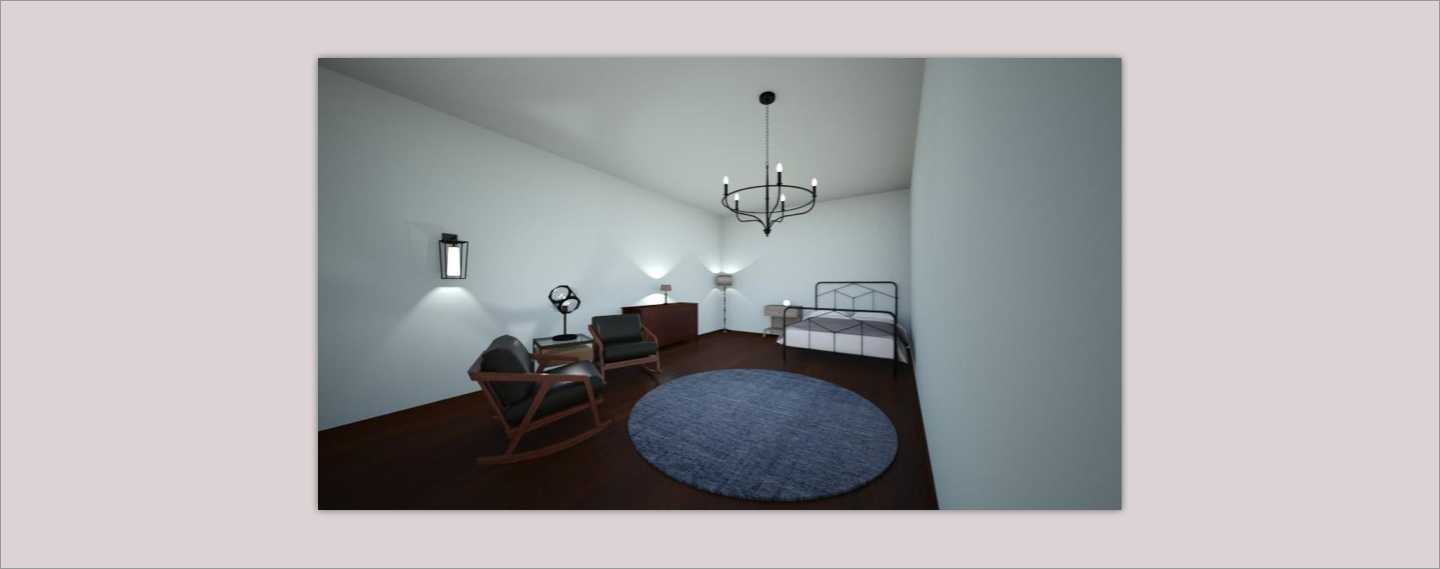
We created four room concepts – one for sight, sound, smell, touch – as well as a tea booth at the entrance with take-home teabags to engage the sense of taste. The “sight” room would be modeled after a bedroom containing a wide variety of interactive light sources. Users would be able to adjust the brightness and color of each light source to show them possible ways to make their space more conducive for sleep. The “sound” room would contain objects such as white noise generators, speakers, and noise-cancelling headphones to show them more ways to unwind before bed when living in a noisy city. The “touch” room would have many types of rugs, pillows, bedding, and mattresses made from different materials in a bedroom-style setting. Finally, the “smell” room would have essential oil diffusers for aromatherapy in addition to a sampling table with the different oils.
We conducted surveys, interviews, and activities with college students in Boston to determine their biggest pain points when trying to establish a healthy work/life balance. Overwhelmingly, respondents reported a desire to improve their sleep quality but felt they had a limited ability to alter their environment according to their needs. Based on this feedback, we focused on creating dedicated spaces to promote relaxation, reflection, and exploration.